CASA Ref: CASR Part 61 MOS Schedule 3 CAKG / COPA · FAA Ref: FAA-S-ACS-6C Area IX Task C (In-Flight Engine Fire)
Scenario & Physics Summary
Diagnosing vapor vs liquid fuel leaks in the cabin, electrical spark isolation, and precautionary landing execution.
Interactive 3D Visual Plates & Scenario Media
Plate 1: In-Flight Fuel Odor & Engine Fire Precaution
Plate 2: In-Flight Fuel Odor & Engine Fire Precaution
Plate 3: In-Flight Fuel Odor & Engine Fire Precaution
Plate 4: In-Flight Fuel Odor & Engine Fire Precaution
Aerodynamic & Operational Physics
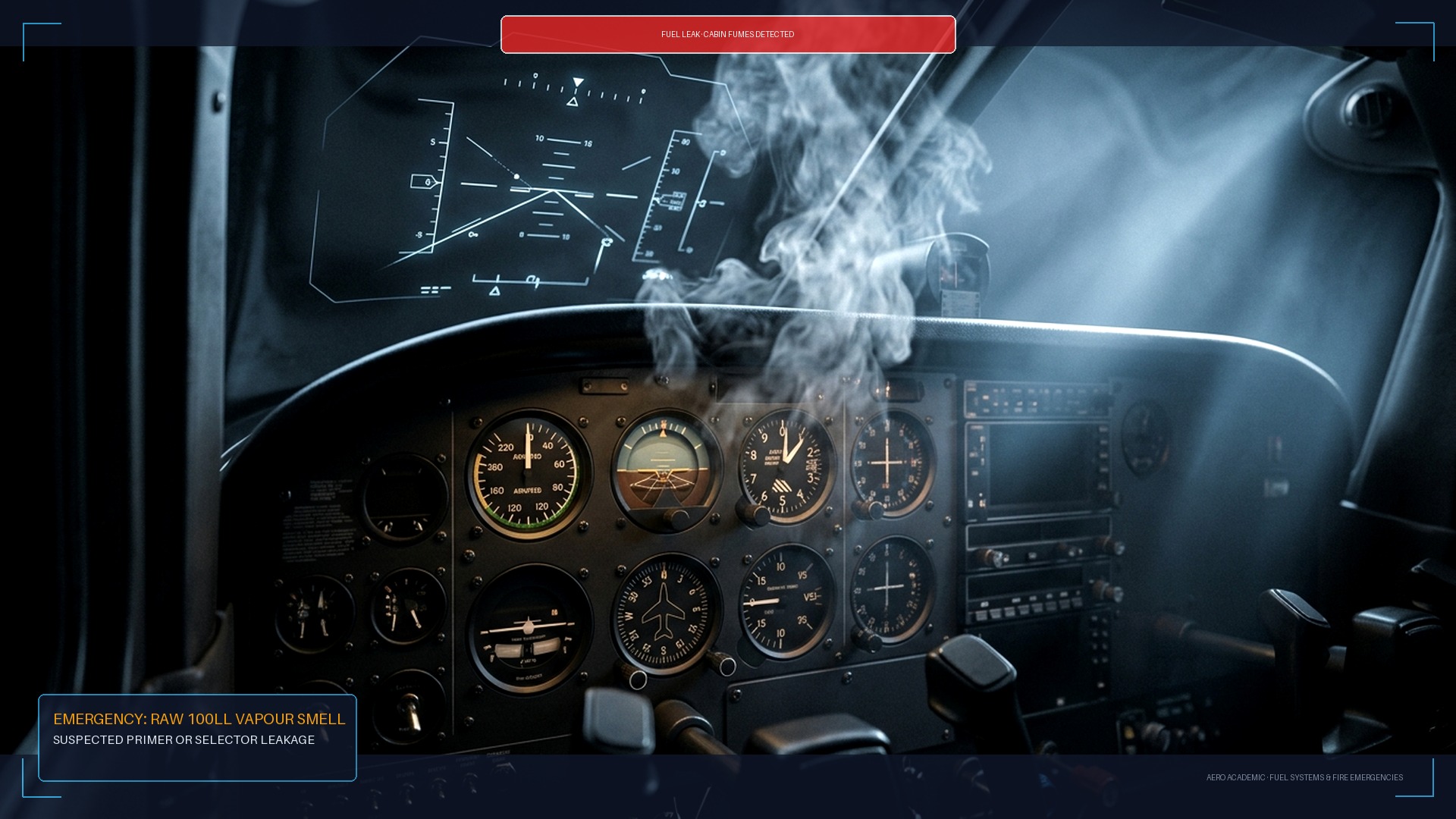
A strong fuel smell in the cabin indicates fuel line rupture, selector valve seal leak, or primer unlock.
Standard cabin heater systems draw hot air over the exhaust shroud; a failed shroud leaks deadly carbon monoxide (CO) and raw fuel vapors into the cockpit.
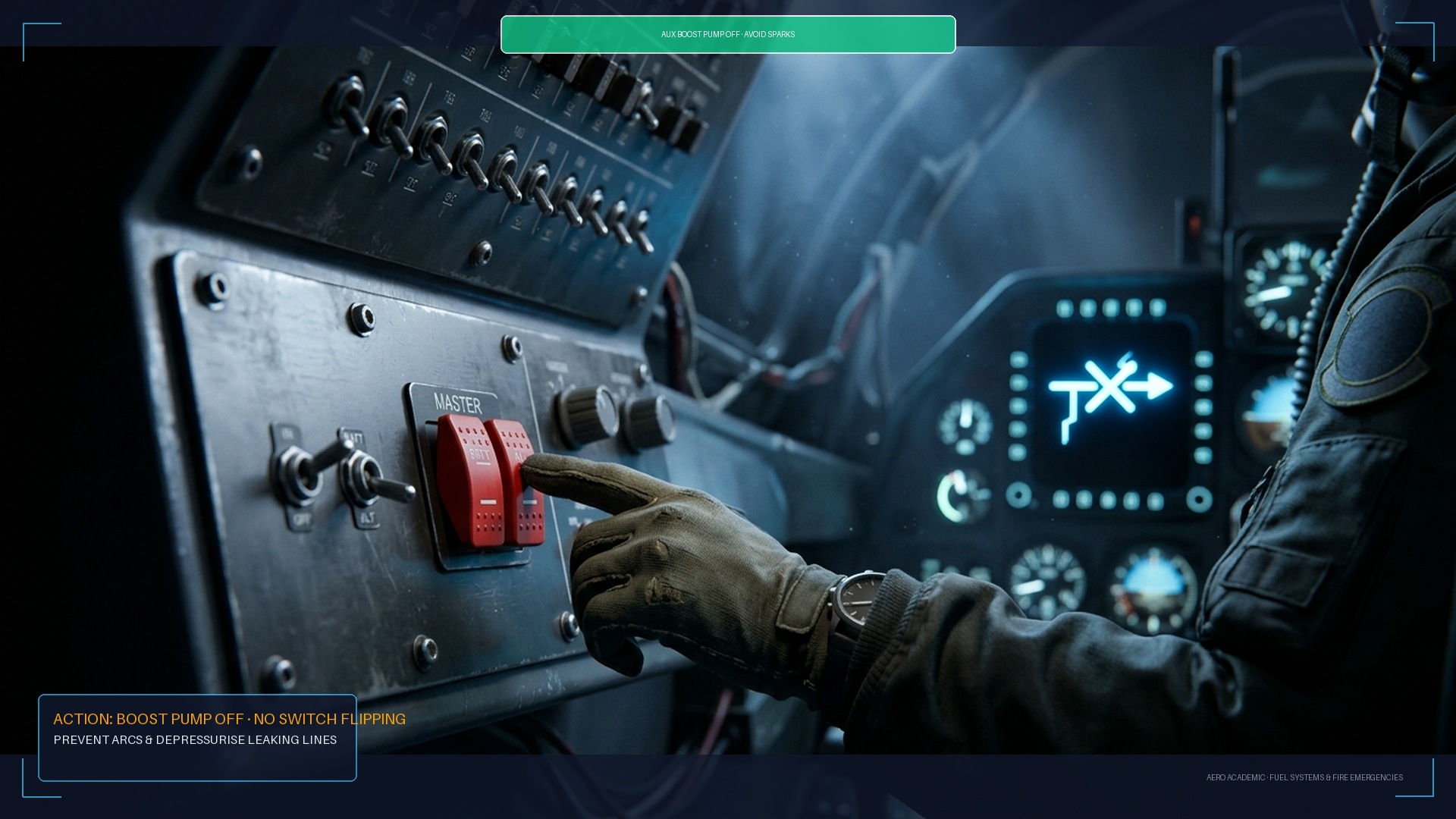
Immediately shut OFF cabin heat/defrost, turn OFF master electrical switch if fire hazard is imminent, open air vents, select un-leaking fuel tank, and execute precautionary landing.
CASA & FAA Exam Gotcha Alert
CASA Exam Trap: Turning on the cabin heater when raw fuel or exhaust fumes are smelled pumps concentrated flammable vapor or toxic CO directly into pilot breathing space.
Frequently Asked Questions & Exam Explanations
What should you do if fuel odor enters the cabin?
Immediately turn cabin heat OFF, open fresh air vents, verify fuel selector position, and prepare for an emergency landing.
Master In-Flight Fuel Odor & Engine Fire Precaution in the Simulator
Drill targeted CASA and FAA exam questions with step-by-step mathematical decoders and regulatory clause links.
 Aero Academic